Older machines often outlive their manufacturers' support. When a gear, bush, bracket, or shaft wears out and no spare or drawing is available, the usual answer is to reverse engineer it: measure the original, work out what it should be, and machine a new one.
Step 1: Gather the original part and its context
The best starting point is the worn or broken part itself. Even pieces of a broken part help. If possible, also look at the mating parts, because they show what the original dimensions must have been. A worn shaft, for example, can be compared with the bearing it runs in.
Step 2: Measure carefully
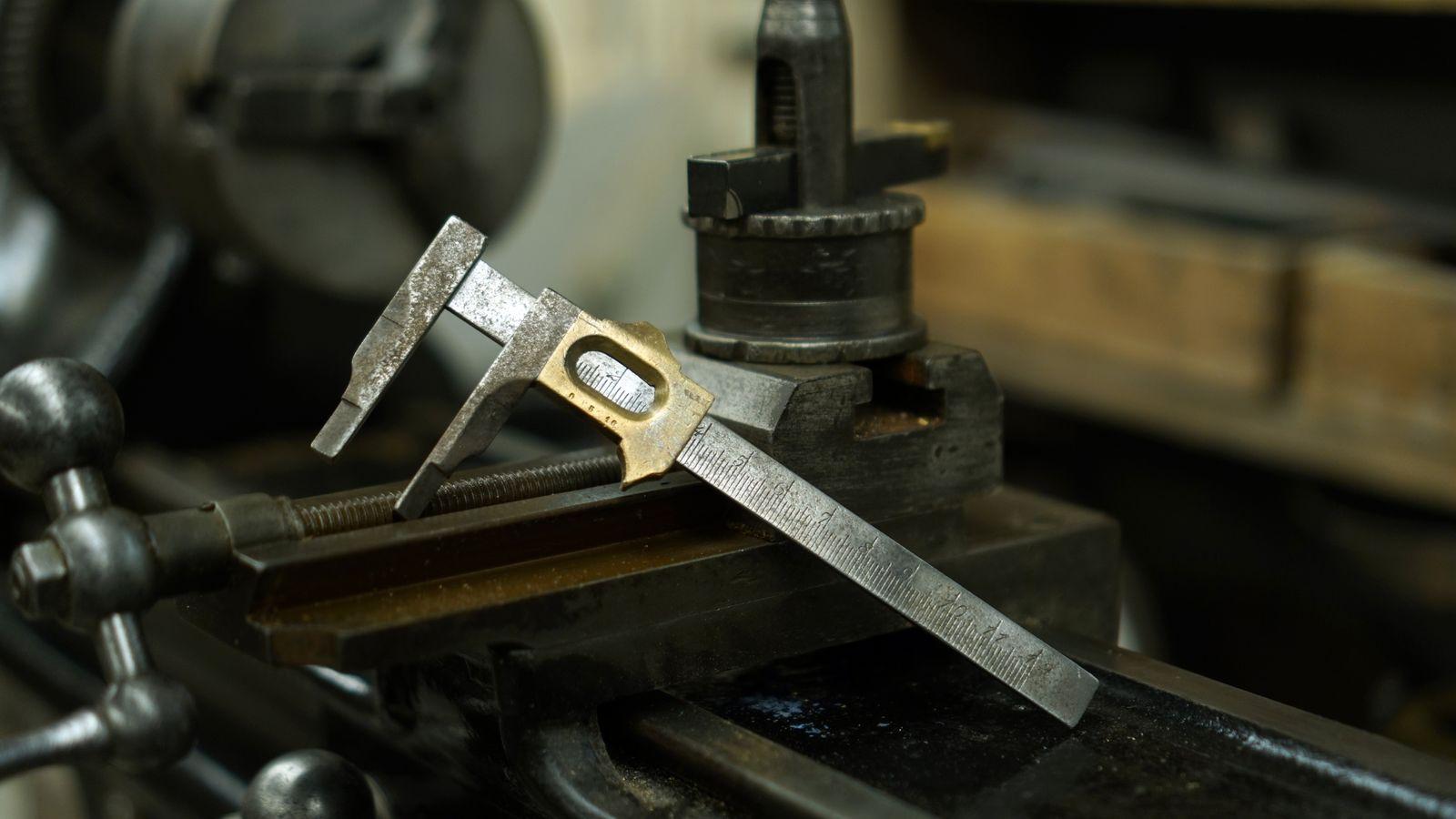
Dimensions are taken with calipers, micrometers, bore gauges, thread gauges, and radius gauges. The machinist measures in several places to find wear patterns and to tell the original surfaces from the damaged ones.
Step 3: Work out design intent
Measurements from a worn part are not the final answer. A shaft measured at 24.93 mm was probably designed at 25 mm. A hole at 10.04 mm was likely a 10 mm hole that has worn. Recognising standard sizes, fits, and threads is the key skill in reverse engineering.
Step 4: Identify the material
Colour, weight, magnetism, hardness, and the type of wear all give clues. If the original material failed early, this is a chance to choose a better one, for example a harder steel for a wearing surface, or an engineering plastic to protect a mating shaft.
Step 5: Make a drawing for the future
Once the dimensions are settled, recording them in a drawing or CAD model means the next replacement is a simple repeat order rather than another reverse-engineering job.
Step 6: Machine and check the fit
The replacement is machined and checked against the agreed dimensions. For critical parts, fitting a first piece before making spares confirms everything is right.
What to send when requesting a replacement
- The original part, or clear photos with a ruler for scale if it cannot be sent yet.
- The machine make and model, if known.
- What the part does and what it connects to.
- How many you need, including spares.
Limits to be aware of
Heavily damaged parts may leave some dimensions uncertain, and complex internal features or heat treatments can be hard to identify by inspection alone. A good machinist will flag any assumptions so you can confirm them before work starts.
Summary
A missing drawing does not mean a machine has to stay down. With the original part, some context about how it works, and careful measurement, most mechanical parts can be remade, often with an improved material.
Have a part to make?
Send your drawings, CAD files, or a sample part and we'll come back with a straightforward quote.
Related services: Custom Parts Manufacturing · CNC Milling