Most of the cost of a machined part is decided at the design stage. Design for manufacturability (DFM) simply means shaping a part so it is quicker and easier to make without changing what it does. Here are ten changes that consistently save time and money.
1. Add radii to internal corners
Cutting tools are round, so internal pocket corners always have a radius. Make the corner radius slightly larger than the tool radius, and the cutter can sweep around the corner smoothly instead of slowing down. If a square corner is needed for a mating part, consider a relief (dog-bone) cut instead.
2. Keep pockets shallow
Deep pockets need long, slender tools that must cut slowly to avoid chatter. As a guide, keep pocket depth to a few times the width of the narrowest section.
3. Use standard hole sizes and threads
Standard drill sizes and common metric threads can be cut with stock tooling. Odd sizes may need special tools or extra interpolation time. Avoid specifying thread depths much deeper than needed; strength gains level off after a few thread diameters.
4. Tolerance only what matters
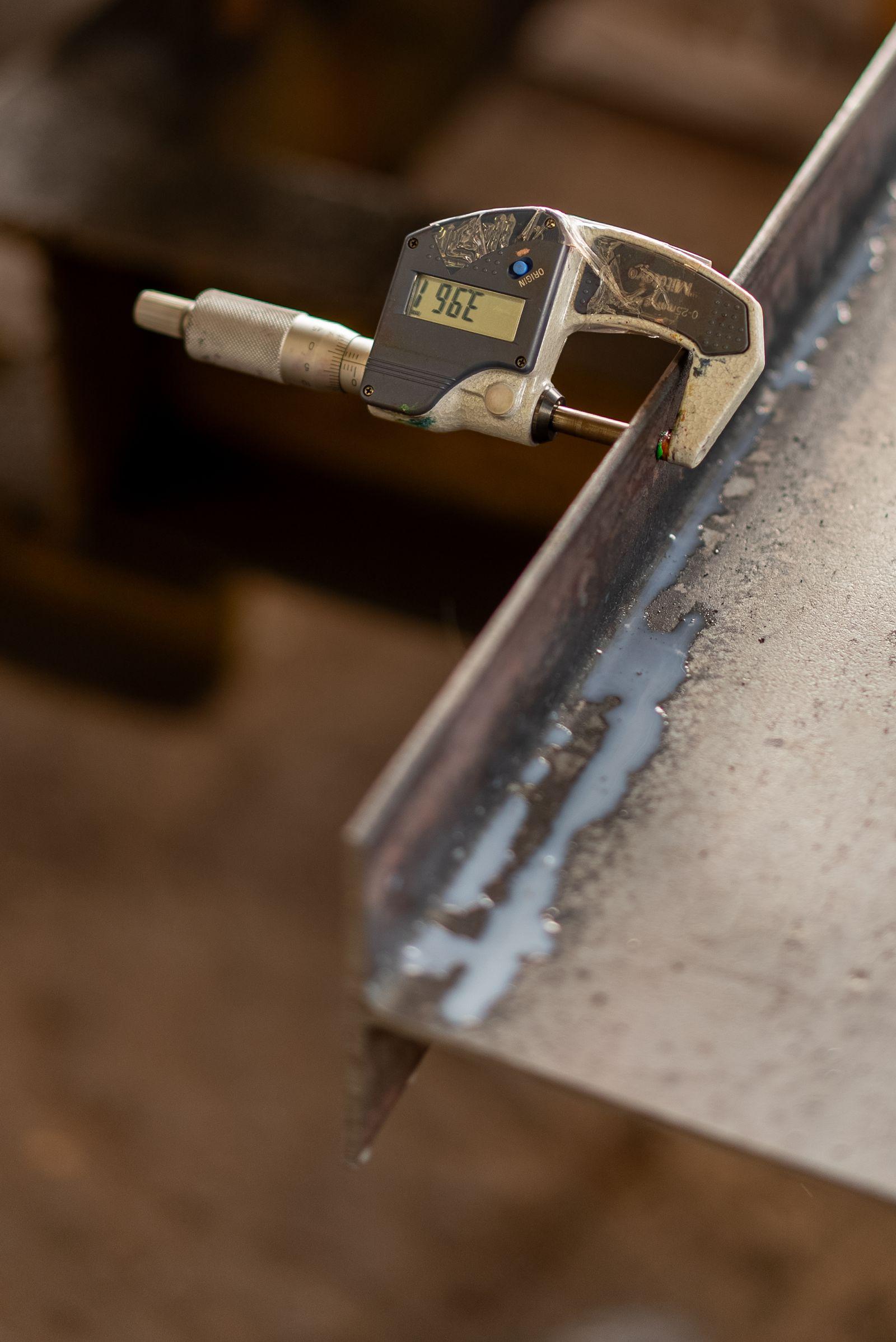
Tight tolerances on non-critical features are one of the most common causes of inflated quotes. Use a general tolerance note and tighten only the functional dimensions.
5. Minimise setups
Every time a part is flipped and re-clamped, time is added and accuracy between faces can suffer. Where possible, put features on one or two faces.
6. Avoid thin walls
Thin walls vibrate and deflect during cutting, forcing light passes. As a rough guide, keep metal walls above about 1 mm and plastic walls thicker, and more where walls are tall.
7. Design around standard stock
If your part is 24 mm thick, a standard 25 mm plate needs only a skim. If it is 26 mm, it may need to be cut from 30 mm or thicker material. Check common bar and plate sizes before fixing overall dimensions.
8. Skip unnecessary cosmetic finishes
A fine surface finish everywhere requires extra finishing passes. Specify fine finishes only on functional surfaces such as seals and sliding faces, and accept a standard as-machined finish elsewhere.
9. Avoid text and complex engraving unless needed
Engraved text needs small tools and long toolpaths. If you need part marking, consider a simple part number, or ask about the simplest acceptable method.
10. Order sensible quantities
Setup and programming are one-time costs per batch. If you know you will need more parts soon, ordering them together usually lowers the price per piece considerably.
Summary
Good DFM is not about compromising the design; it is about removing cost that adds nothing to the part's function. Applying even a few of these tips usually gives a noticeably faster and cheaper job.
Have a part to make?
Send your drawings, CAD files, or a sample part and we'll come back with a straightforward quote.
Related services: CNC Milling · Prototype Machining · Custom Parts Manufacturing