Material choice affects a part's strength, weight, corrosion resistance, and price, and it also affects how long the part takes to machine. Here is a practical overview of the metals most often used for CNC machined parts.
Aluminium
Aluminium is light, machines quickly, and resists corrosion well, which makes it the default for many brackets, housings, plates, and prototypes. 6061 is a versatile general-purpose grade with good machinability and weldability. 7075 is much stronger and is used where strength-to-weight matters, but it costs more and is not generally welded.
- Good for: lightweight structural parts, enclosures, jigs, prototypes, and automation components.
- Watch for: lower wear resistance and stiffness than steel; it can be anodised for a harder, more corrosion-resistant surface.
Mild steel
Mild (low-carbon) steel is strong, inexpensive, easy to weld, and widely available. In India, common grades include IS 2062 plate for general structural parts and EN8, a medium-carbon steel, for shafts and higher-strength components.
- Good for: base plates, machine frames, shafts, spacers, and general-purpose parts.
- Watch for: it rusts, so it usually needs oiling, painting, plating, or blackening.
Stainless steel
Stainless steel is chosen for corrosion resistance and hygiene. SS 304 is the common general-purpose grade. SS 316 adds molybdenum for better resistance to chlorides and harsher chemicals. Stainless is tougher to machine than mild steel or aluminium, so expect longer cycle times and higher prices.
- Good for: food, pharmaceutical, and medical equipment, marine and outdoor parts, and fluid-handling components.
- Watch for: work hardening during cutting, and higher material cost.
Tool steel
Tool steels such as D2, H13, and OHNS are designed to be hardened for wear resistance. They are usually machined in the soft (annealed) state, heat treated, and then ground or finish-machined if tight tolerances are needed after hardening.
- Good for: punches, dies, wear plates, cutting edges, and locating pins.
- Watch for: heat treatment can cause slight distortion, so allow for finishing operations afterwards.
Brass and copper
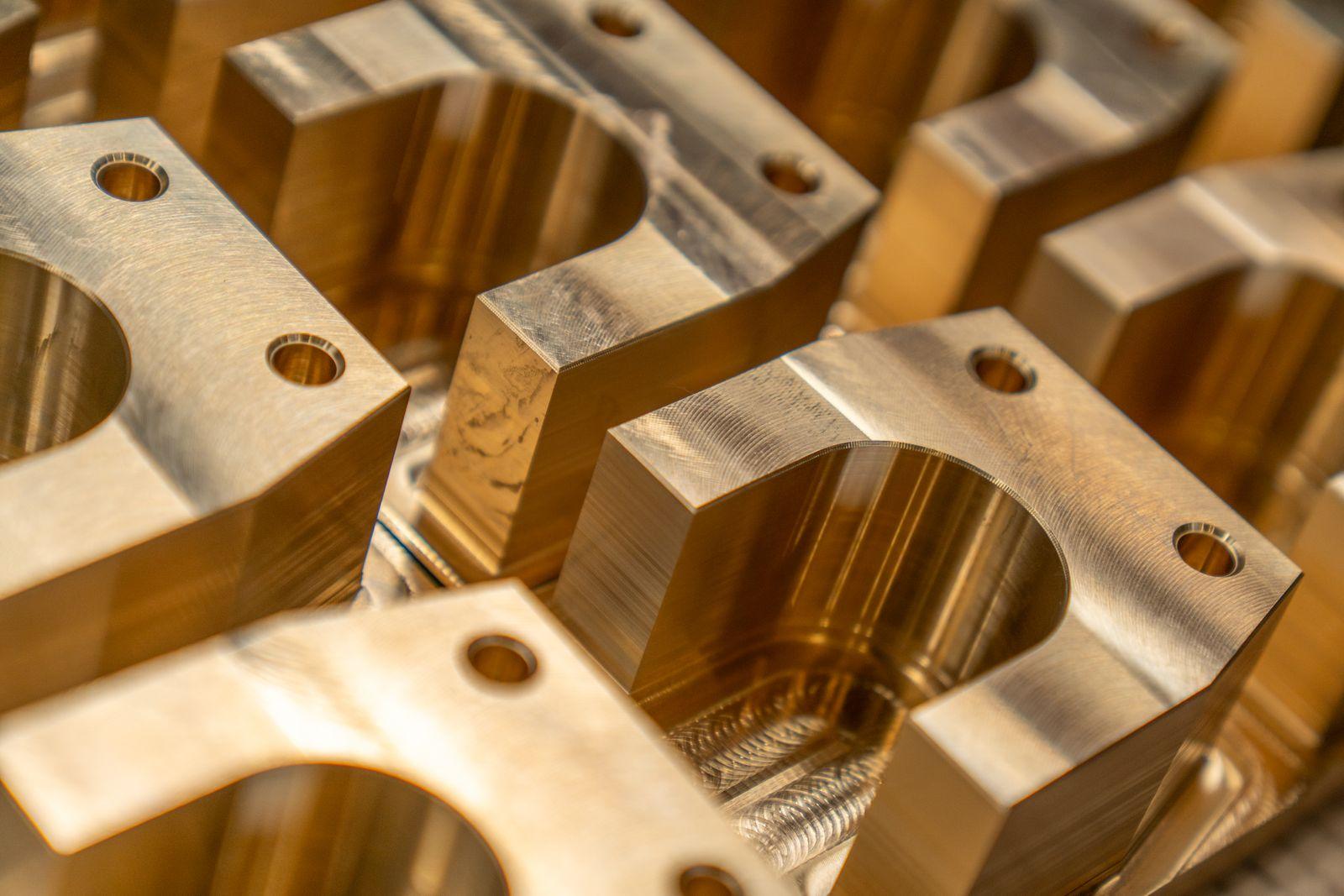
Brass is one of the easiest metals to machine. It gives a clean finish, resists corrosion, and has low friction, which suits fittings, bushes, valve parts, and decorative components. Copper is chosen for its excellent electrical and thermal conductivity, for busbars, electrodes, and heat-transfer parts, but it is softer and gummier to machine than brass.
Titanium
Titanium, most often Grade 5 (Ti-6Al-4V), offers a very high strength-to-weight ratio and excellent corrosion resistance. It is also expensive and slow to machine because it holds heat at the cutting edge. Use it when its properties are genuinely needed.
How material affects price
- Raw material cost: titanium, copper, and stainless steel cost noticeably more than aluminium or mild steel.
- Machining time: harder and tougher materials need slower cutting and wear tools faster.
- Availability: standard grades in standard sizes are quicker to source than special alloys.
Quick reference
- Light and quick to machine: aluminium 6061
- Strong and economical: mild steel or EN8
- Corrosion resistant: SS 304, or SS 316 for harsher conditions
- Wear resistant after hardening: tool steel
- Low friction and easy machining: brass
- Electrical or thermal conduction: copper
- Strength-to-weight above all: titanium
Have a part to make?
Send your drawings, CAD files, or a sample part and we'll come back with a straightforward quote.
Related services: CNC Milling · Custom Parts Manufacturing