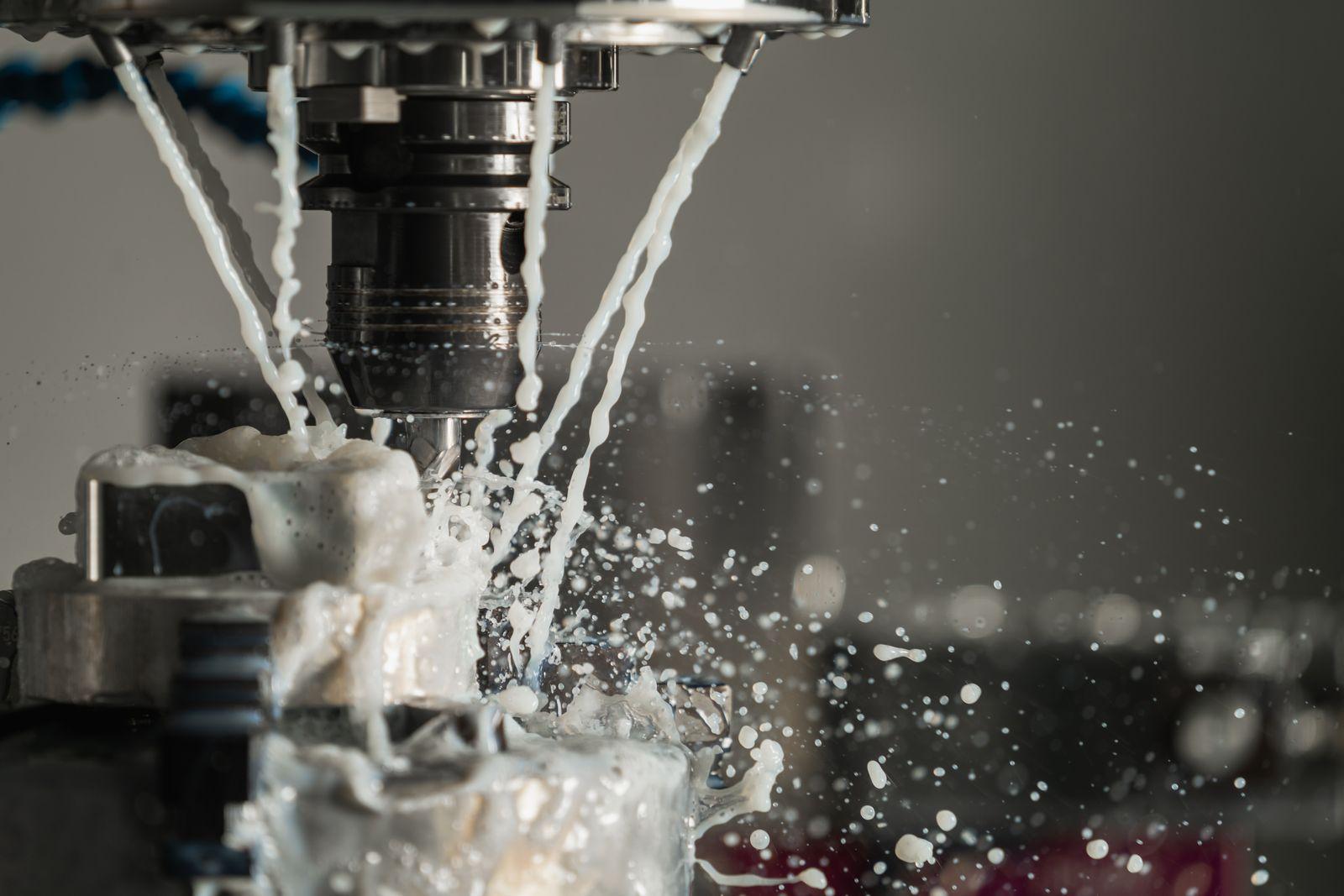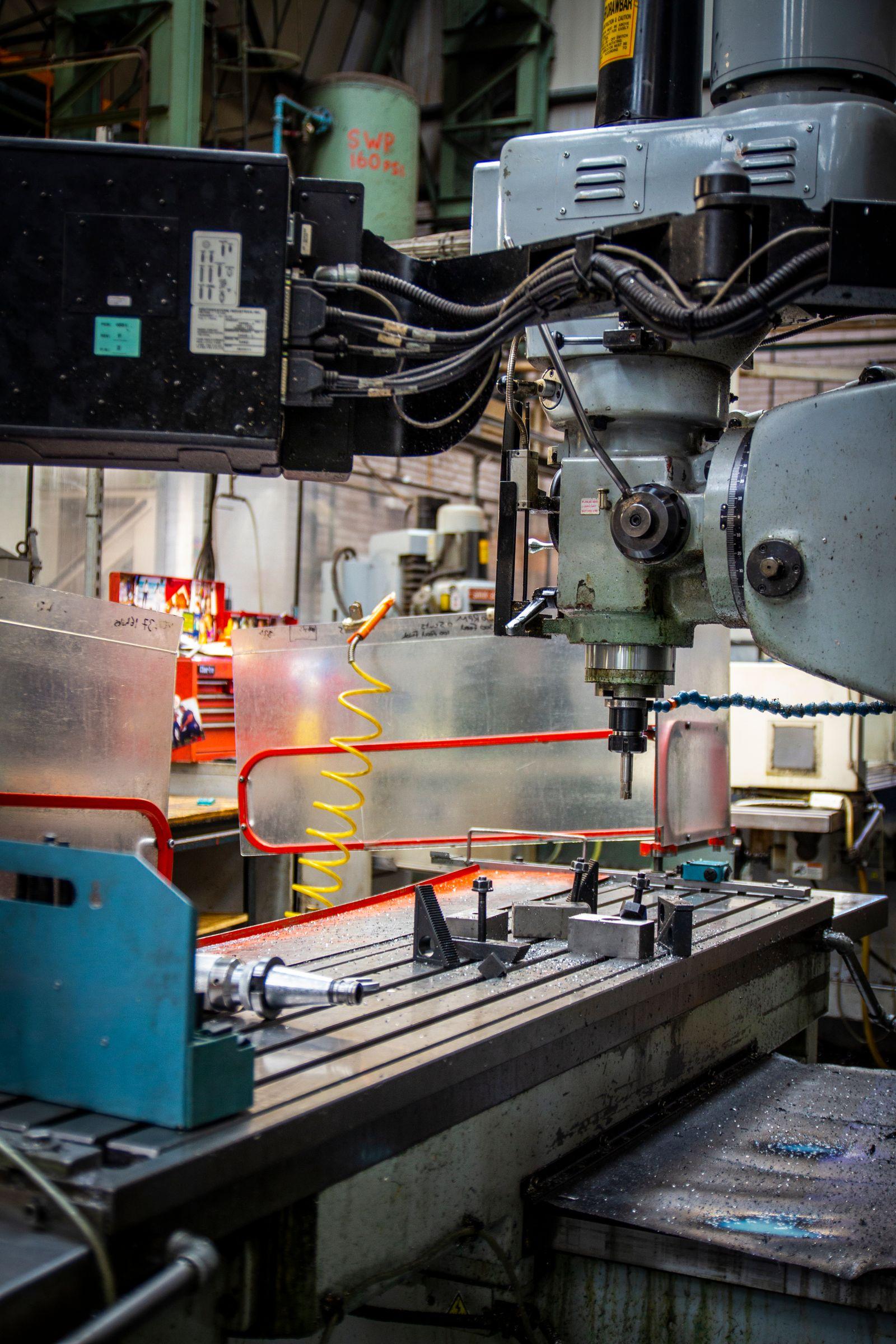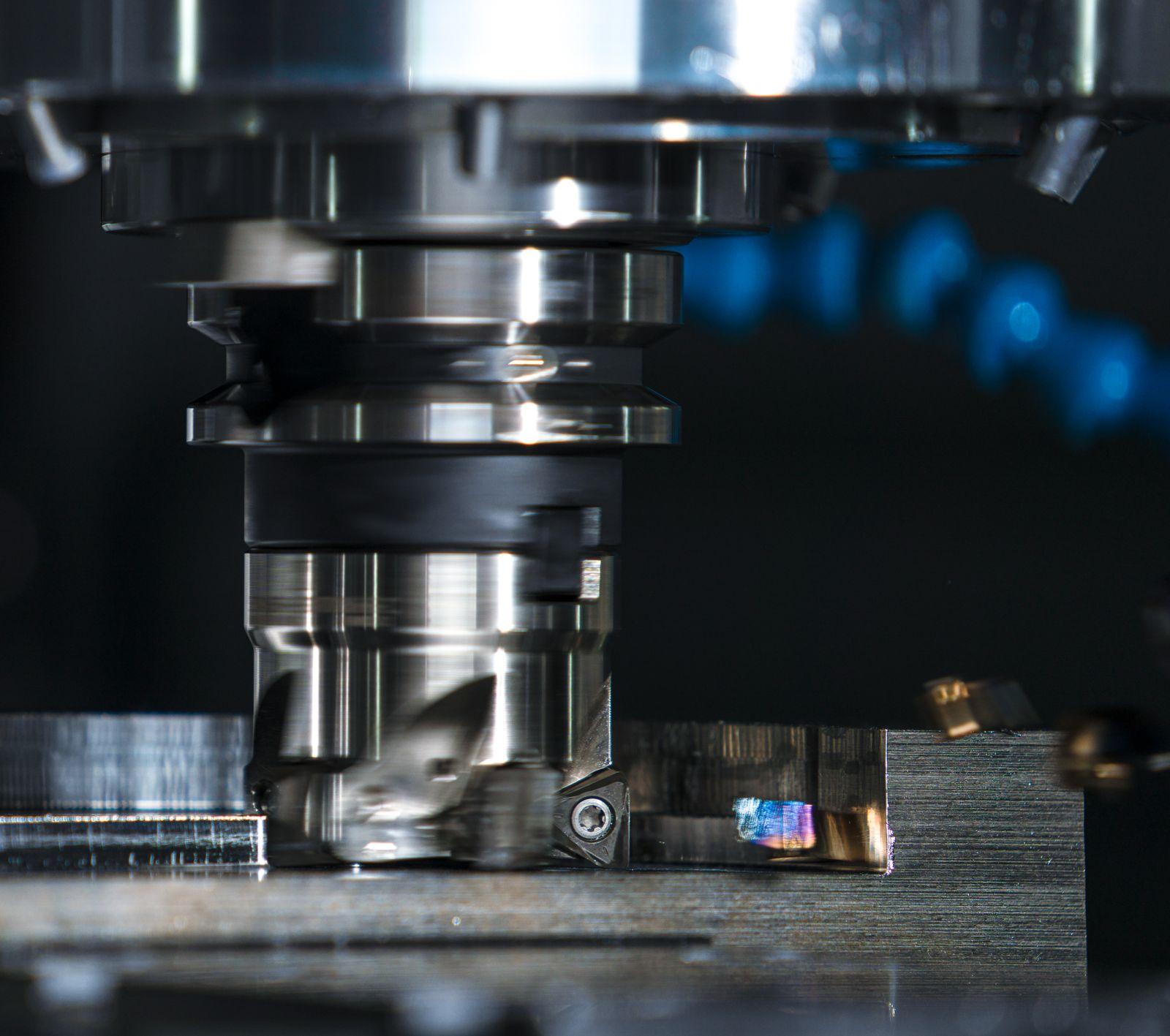
Machine shops often describe their equipment by the number of axes. More axes sounds better, but the right choice depends entirely on the part. Here is what the terms mean in practice.
3-axis machining
A 3-axis mill moves the cutting tool along three straight lines: X (left to right), Y (front to back), and Z (up and down). The tool always approaches the part from above. To machine another face, the part is unclamped, turned over or rotated, and clamped again in a new setup.
- Ideal for: plates, brackets, housings, fixture components, pockets, slots, and hole patterns.
- Advantages: simple programming, rigid setups, widely available, and cost-effective for most prismatic parts.
- Limits: features on many faces need several setups, and undercuts or angled holes may need special fixtures.
4-axis machining
A 4-axis machine adds a rotary axis, usually called the A-axis, that turns the workpiece around the X axis. The part can be indexed to different angles, or rotated continuously while cutting, so several sides can be reached in one setup.
- Ideal for: parts with features around their circumference, cams, and holes on several sides of a block.
- Advantages: fewer setups and better alignment between features on different faces.
5-axis machining
A 5-axis machine has two rotary axes in addition to X, Y, and Z. The tool can approach the part from almost any direction. In 3+2 machining, the rotary axes tilt the part to a fixed angle before cutting. In simultaneous 5-axis machining, all five axes move together to follow complex surfaces.
- Ideal for: impellers, turbine blades, complex moulds, and organically shaped parts.
- Trade-offs: higher machine and programming cost, which shows up in the price of the part.
Do you actually need more axes?
For the majority of industrial parts, such as plates, brackets, blocks, spacers, fixtures, and replacement components, a 3-axis machine with good fixturing does the job well. Extra axes earn their keep on complex freeform shapes or when a part would otherwise need many setups.
Designing for 3-axis machining
- Keep features accessible from as few directions as possible, ideally from the top and bottom.
- Avoid undercuts unless they are essential; they often need special cutters.
- Give internal pocket corners a radius; a round cutter cannot make a sharp internal corner.
- Make holes perpendicular to a face where you can.
Summary
The number of axes describes how a machine can reach the part, not how accurate it is. Match the machine to the geometry. When in doubt, send the drawing and ask; a machinist can tell you quickly whether your part suits 3-axis machining or would benefit from a different approach.
Have a part to make?
Send your drawings, CAD files, or a sample part and we'll come back with a straightforward quote.
Related services: CNC Milling · Prototype Machining